

How to automate equity vesting reconciliation across Workday, E*TRADE, and NetSuite
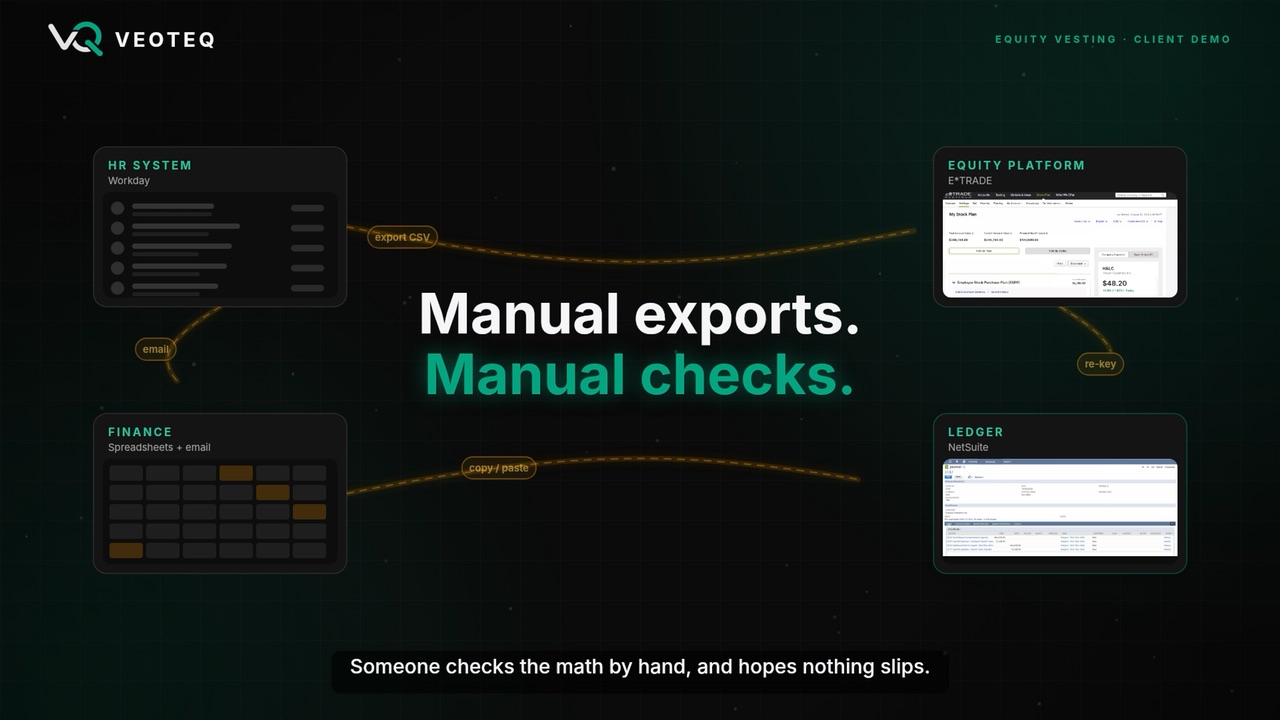
Every vesting date, someone in finance does the same careful, manual work. They export employee data from the HR system, compare it with the vesting schedule in the equity platform, work out what should release, and turn the result into journal entries in the ledger. When it goes well, nobody notices. When it doesn't, a terminated employee's shares vest, a leave of absence is missed, or the stock compensation entries don't tie out at close.
This guide walks through how to automate that reconciliation across three common systems, Workday (HR), E*TRADE (equity administration), and NetSuite (ERP), without taking people out of the decisions that matter. The same pattern works with other HR, equity, and ERP platforms.
Takeaways
- The risk in equity vesting is in the hand-offs between systems, not in any one system
- Check every vest against four things: date, vesting percentage, employment status, and remaining balance
- Automate the checks and the paperwork; keep a person approving the release and the entries
- Log every check and decision so close and audit take hours, not days
Why vesting reconciliation is still manual
Each system does its own job well. The HR system knows who is employed, on leave, or terminated. The equity platform knows the grants and the schedules. The ledger records the accounting. But no single system checks that all three agree on the day a vest happens. That job falls to a person with a spreadsheet, usually under deadline, often at quarter-end.
The typical process looks like this:
- Export employee and status data from the HR system as a CSV
- Compare it by hand with the upcoming vesting schedule
- Re-key or upload adjustments into the equity platform
- Copy the results into spreadsheets to calculate the accounting
- Prepare and post journal entries in the ledger, then check that they balance
Every arrow in that list is a place where data can drift.
The four checks every vest needs
A reliable reconciliation checks each vesting event against four questions before anything releases:
- Date: is today really a vesting date for this grant, under its schedule?
- Vesting percentage: does the amount releasing match the schedule and what has already vested?
- Employment status: is the person still eligible, or are they terminated, on leave, or changing status?
- Remaining balance: after this vest, does the unvested balance still reconcile with the grant?
Anything that fails a check becomes an exception with a reason and an owner, rather than a surprise at close.
What an automated workflow looks like
In the VEOTEQ workflow, the schedule is pulled from the HR system, and each upcoming vest is checked against the four questions above using data from all three systems. The results land on one dashboard, where the controller or stock plan administrator reviews the exceptions and approves the batch.
Only after approval does the workflow trigger the vest in the equity platform and post balanced journal entries in the ledger. Every check, exception, decision, and entry is logged with its source records.
You can see the full flow, with sample data, in our 2-minute equity vesting demo.
The controls finance teams should insist on
- People approve: nothing releases and nothing reaches the ledger without a named approver.
- Read before write: start in read-only or draft mode, and widen the workflow's role only after it has proven itself on real cycles.
- Least-privilege access: each connection uses only the permissions its step needs.
- A complete audit trail: every number on the dashboard traces back to its source record.
How to start
Pick one upcoming vesting cycle and measure today's process: how many vests, how long the reconciliation takes, and how many corrections it needs. That baseline tells you whether automation is worth it, and it is the first thing we look at in a 30-minute AI Fit Call. If it is, an AI Value Sprint defines the controls and success measures before anything is built.